

How to Weatherproof Your Marquee Event in Australia
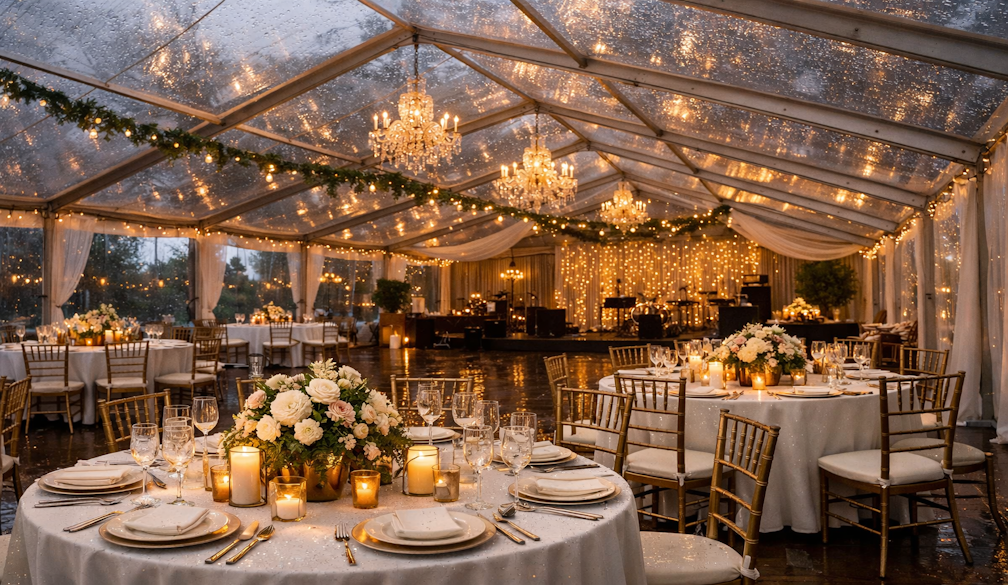
Australian weather doesn't care about your run sheet. One minute it's blue skies and stinking hot, the next there's a sideways gust threatening the centrepieces. If you're planning a wedding, party or corporate event outdoors, the weather is the one guest you can't un-invite, so the smartest move is to plan as if it's coming, even if the forecast looks perfect.
The good news is that a well-planned marquee hire takes almost all of that risk off the table. You just need to know what to ask for and when to ask for it.
Why "she'll be right" isn't a plan
Sydney's Observatory Hill weather station has been recording rainfall since 1858, and the long-term data shows the city receives a mean annual rainfall of over 1,200mm a year, spread fairly evenly across the seasons (Bureau of Meteorology, bom.gov.au).
In plain terms: there's no single "safe" month. Even the driest seasons still bring rain, wind or sudden temperature swings, and the rest of the country is just as changeable, hot dry summers in Perth, monsoon season in Darwin, sudden hailstorms in Melbourne.
This is exactly why so many event hosts now build their event around a marquee from the start, rather than treating it as a backup plan they hope they won't need.
Start with the right marquee, not just any marquee
Not all marquees are built the same, and the difference matters more than people expect.
- Structure type. A clear-span or frame marquee with no internal poles can handle far more wind and weight than a basic pole tent, and it gives you a clean, uninterrupted space for tables, dance floors or stages.
- Wall options. Clear PVC walls let light in and keep guests dry without losing the open, airy feel. Solid walls add more protection against wind and cold, and can be swapped or combined depending on the day.
- Flooring. A subfloor isn't just for comfort. It keeps the ground stable if it's been raining, stops heels sinking into soft grass, and gives you a flat, safe surface for furniture and walkways.
- Anchoring. Marquees need to be pegged, weighted or both, depending on the ground. Concrete, decking or paving will need different anchor points than open lawn, so it's worth flagging your site type early with your supplier.
A good event hire company will ask about your site, your guest numbers and the season before recommending a structure, if they're not asking these questions, that's worth noticing.
Plan for heat as much as you plan for rain
Australians tend to picture "weatherproofing" as keeping rain out, but heat causes just as many problems at outdoor events. A marquee with no airflow can turn into a greenhouse by early afternoon, especially over summer.
A few things make a real difference here:
- Ventilation panels or roof vents to let hot air escape.
- Fans or portable air conditioning units, sized to the marquee footprint, not just the guest count.
- Shade positioning. If possible, orient the marquee to avoid direct afternoon sun on the open sides.
- Hydration stations. Simple, but guests will thank you, particularly at long lunch events or weddings with extended cocktail hours.
If your event runs through the middle of the day in summer, ask your supplier about heat load, it's a fair question and a good one to put to anyone offering affordable Marquee marquee hire in your area.
Wind is the quiet risk most people forget
Rain gets all the attention, but wind is what actually causes problems on the day, lifted tablecloths, swinging market lights, or in worse cases, structural movement. A few practical steps:
- Ask about the marquee's wind rating and what wind speed triggers a "stand down" or evacuation procedure.
- Avoid loose, lightweight decor near open sides, bunting, paper decorations and unweighted signage are the first things to go.
- Secure florals, balloons and table settings with weights or clips rather than relying on placement alone.
- If your site is exposed (near the coast, on a hill, in an open paddock), mention this upfront. Suppliers may recommend a sturdier structure or additional guy ropes and anchor points.
Build in a wet-weather contingency, not just a wet-weather hope
A genuine contingency plan covers three things: drainage, walkways and timing.
Drainage matters most if your event is on grass. Ask whether your supplier can install matting or raised flooring, and check the site's natural slope, water needs somewhere to go that isn't through the dance floor.
Walkways between car parks, ceremony spaces and the marquee are often overlooked. A short stretch of exposed lawn can turn a beautiful outfit into a mud-streaked one if it rains an hour before guests arrive. Covered or matted walkways solve this cheaply.
Timing flexibility is worth discussing with your venue and suppliers in advance. Knowing whether a ceremony can be shifted indoors, or whether catering and bar service can adapt to a delayed start, takes a lot of pressure off the day itself.
Talk to your supplier early, not the week before
The biggest weatherproofing mistake isn't a missing wall panel or the wrong flooring, it's leaving these conversations too late. Marquees, especially larger structures with walls, flooring and climate control, need to be ordered and fitted with enough lead time to get it right.
When you're comparing quotes for marquee hire, ask each company directly:
- What's included as standard versus what costs extra (walls, flooring, lighting, climate control)?
- What's their policy if weather forces a late change to the structure or setup?
- Have they worked at your specific venue or a similar site before?
- What wind and weather conditions affect bump-in or bump-out?
A transparent, established Melbourne event hire company will have straightforward answers to all of these, because they'll have faced this exact situation before, probably more than once in the same week.
The bottom line
You can't control the weather, but you can plan so thoroughly that it barely matters. The right marquee, the right walls and flooring, a sensible approach to heat and wind, and an honest conversation with your supplier well before the big day, that's the whole formula. Get those right, and rain, wind or blazing sun become a footnote in your event story rather than the headline.