

When Should You Visit a Skin Cancer Clinic? Why Early Attention Matters
Australia's outdoor lifestyle makes sun exposure a regular part of life for many people. Gardening, playing sport, working outdoors, going to the beach and enjoying weekend activities can all contribute to cumulative ultraviolet (UV) exposure over time. Visiting a skin cancer clinic helps you understand if everything is fine with your skin or something needs further assessment. Professional assessment provides reassurance, and, where necessary, supports earlier investigation and treatment.
The country's climate and lifestyle expose Australians to significant sun exposure throughout their lives. Over time, exposure to ultraviolet radiation can affect the skin. Regularly checking on your skin helps you identify new spots or changes to existing marks. Australia has one of the highest rates of skin cancer in the world. Look beyond the areas that are easy to see, as changes can occur on the scalp, back, behind the ears and other less visible areas.
Reputable Skin Cancer Clinic Helps You Notice Skin Changes
Many people are familiar with the spots and moles they have had for years. It is normal for the skin to change over time. New freckles, moles and other marks may appear, particularly as we age. However, changes occur gradually. Thus, it sometimes becomes difficult to notice when something is different. A spot may change in size, shape or colour. In some cases, a spot may also bleed, crust, become irritated, or fail to heal as expected. Visit your nearest skin cancer clinic right away.
Do Not Wait for the Symptoms
People commonly assume that a concerning spot must hurt, itch or cause discomfort. In reality, a skin change may not always produce noticeable symptoms. Also, when checking their skin, most people focus on their face, arms and other visible areas. However, the scalp, back, behind the ears, the soles of the feet, and other areas also need attention. A thorough approach to skin awareness involves considering the whole body. Healthcare professionals use specialised equipment for more detailed examination.
What Happens During a Professional Assessment?
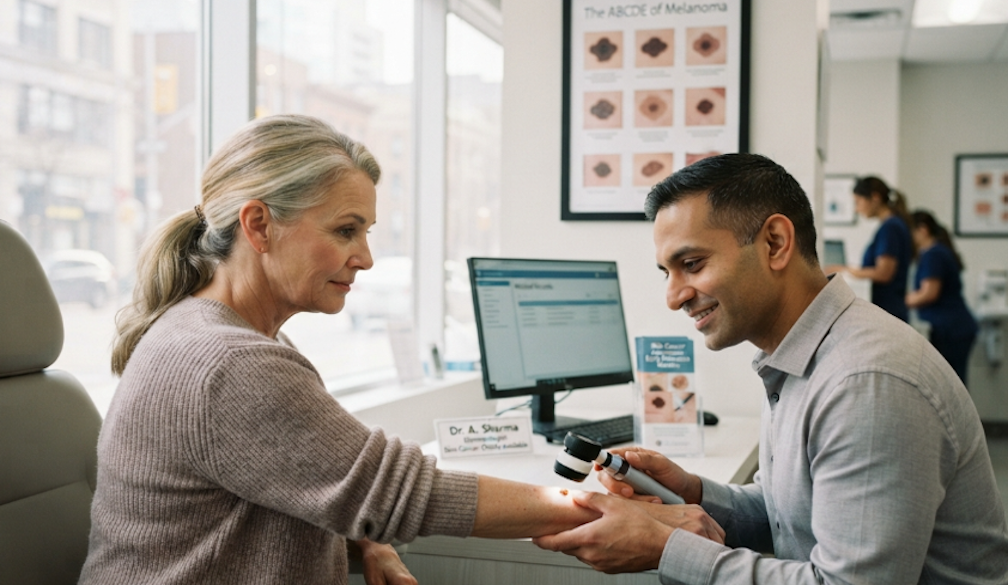
An experienced healthcare professional identifies an area that requires additional investigation. They consider aspects such as the spot, its location, your personal history and other risk factors. Then they explain the next steps. The exact process usually depends on your individual circumstances and the reason for your appointment. They discuss your concerns, ask about your medical and skin history and examine your skin. Understanding the process makes the experience feel less overwhelming.
Regular Monitoring is Important
Being proactive about your skin health helps you stay informed and address concerns on time. Monitoring does not necessarily mean there’s a serious problem. It simply provides a way to observe changes over time and respond appropriately. There is no single schedule that is suitable for everyone. Your recommended approach depends on your individual history, skin type, past sun exposure and previous skin concerns.
Conclusion
Australia experiences severe UV exposure. That’s why looking after your skin should be part of your regular health routine. However, you do not need to examine your skin obsessively to become more aware of changes. A simple, methodical check from time to time can help you understand what is normal for you. Look at your skin in good lighting and pay attention to new marks or changes in existing ones. Use a mirror to examine areas that are difficult to see. Ask a trusted family member or friend to assist with areas such as your back.
In a country where sun exposure is a part of everyday life, making skin health a regular priority is a sensible decision. Regular self-awareness, sensible sun protection and professional assessment when something changes can all play an important role in looking after your skin. If you notice something that looks different, keep an eye on it, but do not rely solely on self-monitoring if you remain concerned. Visit your trusted skin cancer clinic and take professional advice.